Magnetohydrodynamic control of revolving wings
Dr Mohammad Ghaffari · UNSW Sydney · 2020 to 2024 · Research
Context
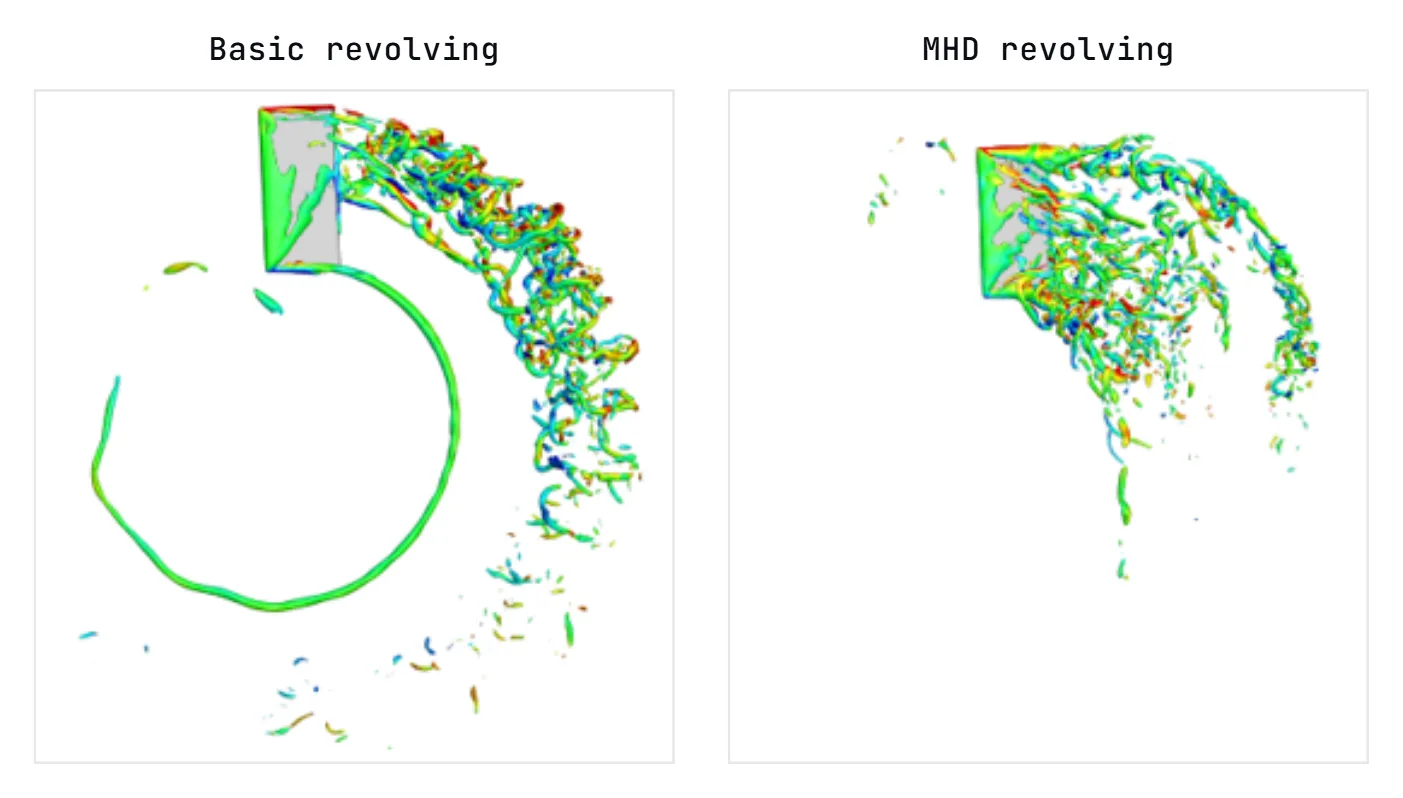
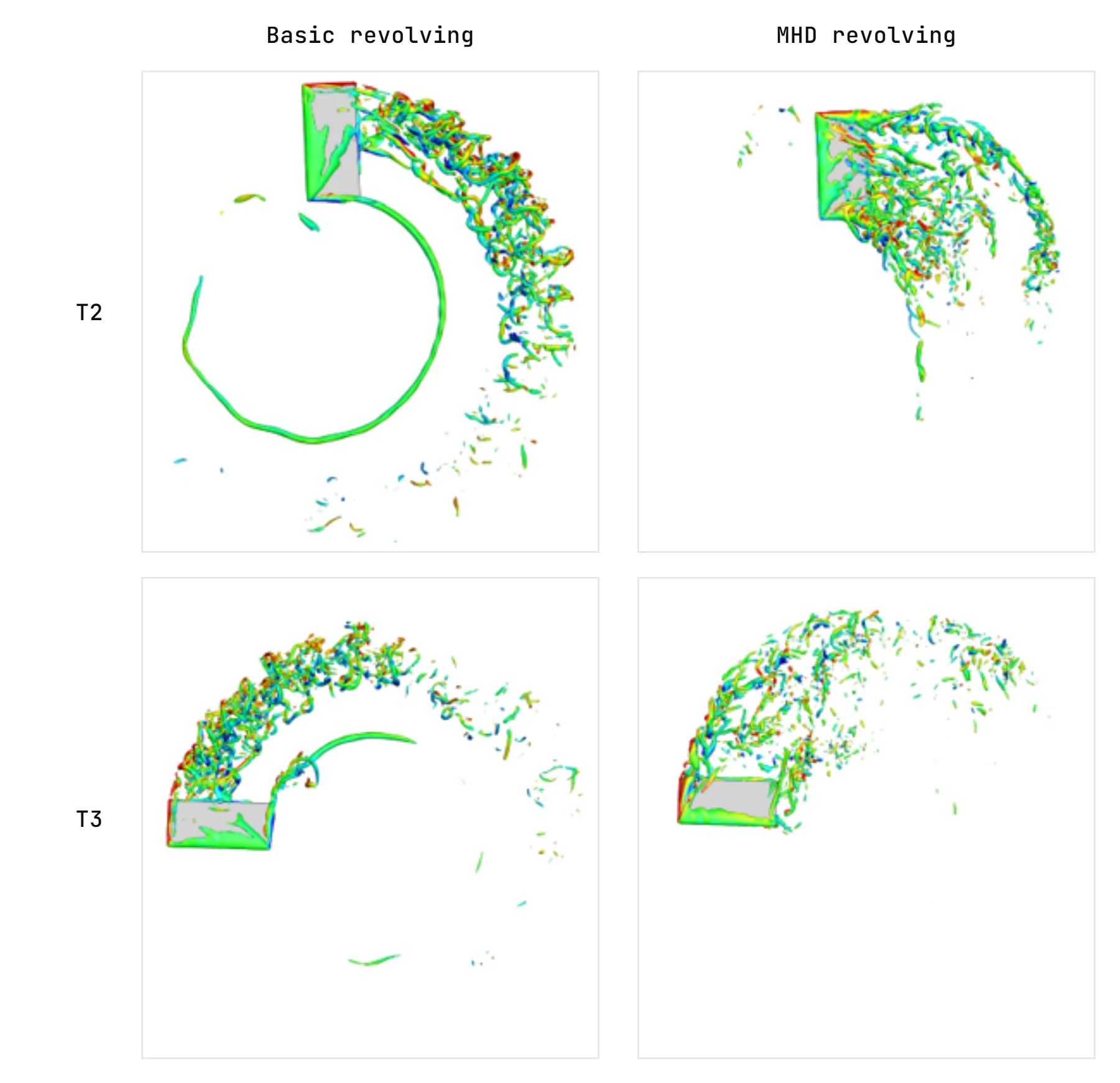
Revolving wings generate lift through a leading edge vortex that becomes unstable as it grows and breaks down. Stabilising that vortex directly improves the performance of small rotors and flapping wing vehicles.
My role
I was the CFD engineer extending the solver with magnetohydrodynamic forcing and running the simulation campaign.
Approach
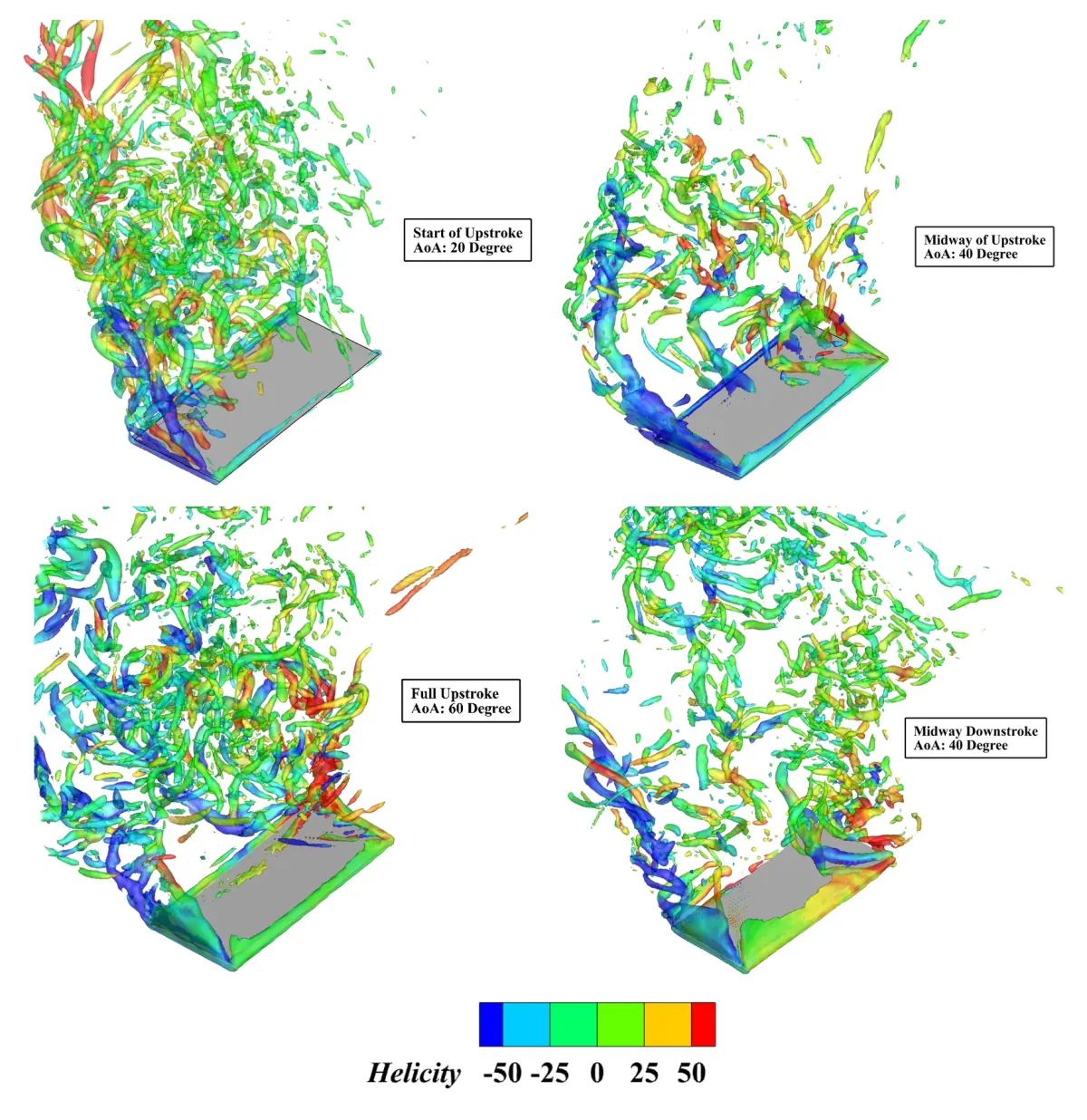
- Applied magnetohydrodynamic body forces to wings in revolving motion and in combined revolving and pitching motion.
- Varied magnetic field strength, wing aspect ratio and angle of attack.
- Examined the three dimensional vortex structures and the resulting force histories.
Figures
Outcome
The lift to drag ratio improved by up to 18 per cent for basic revolving wings and up to 32 per cent at low aspect ratio, with leading edge vortices staying coherent across a range of pitch angles.
- Magnetohydrodynamics
- Lorentz force
- Revolving wings
- Vortex stability