Unsteady flow through flexible porous media
Dr Mohammad Ghaffari · UNSW Sydney · 2020 to 2024 · Research
Context
Classical porous media models assume a rigid matrix. Many real systems, from vegetation to filtration media and biological tissue, are built from light flexible elements that deform under the very flow they resist.
My role
I was the CFD engineer designing the simulation campaign and carrying out the regime analysis.
Approach
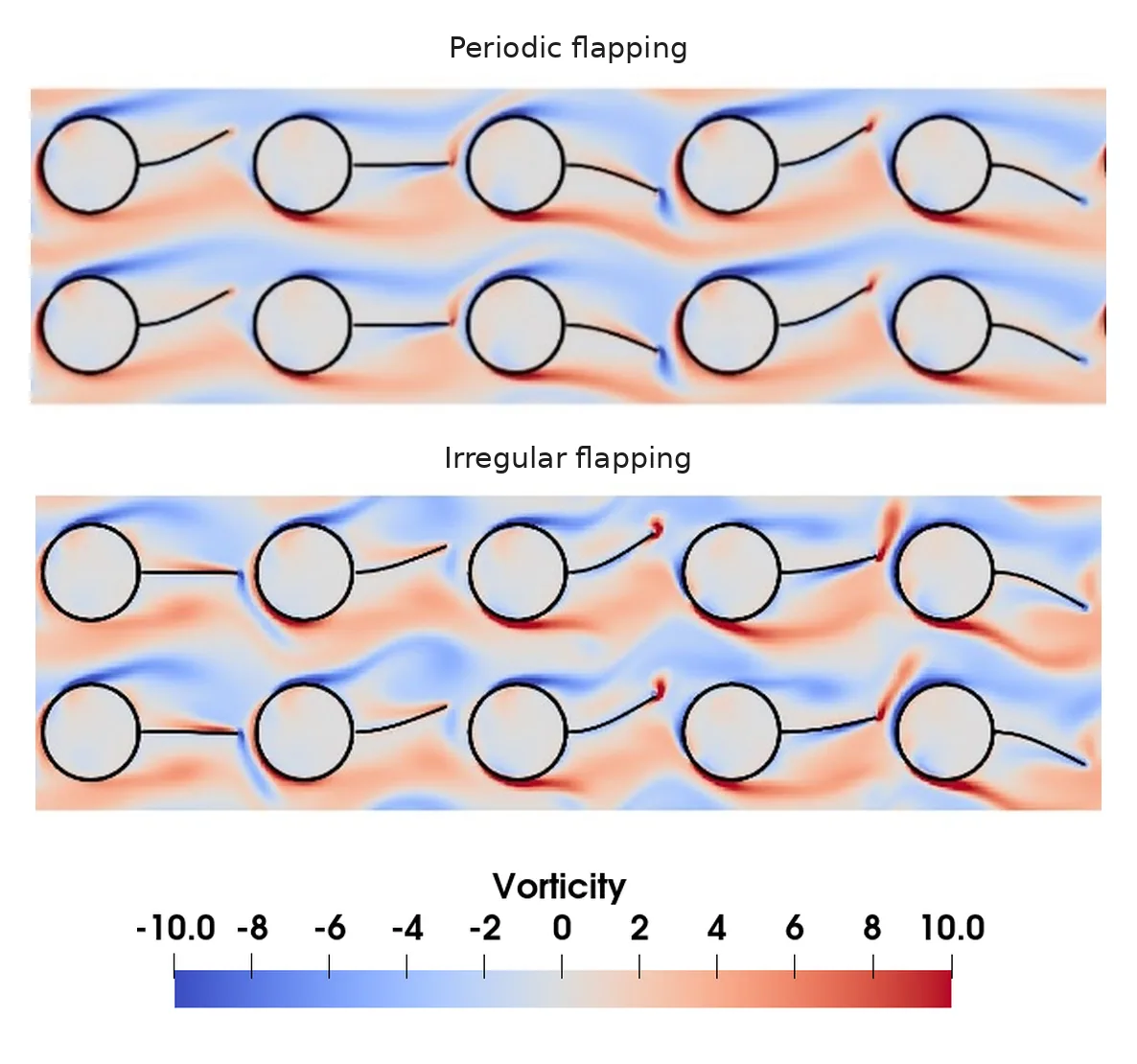
- Represented the porous medium as arrays of cylinders with flexible flaps attached to the aft section.
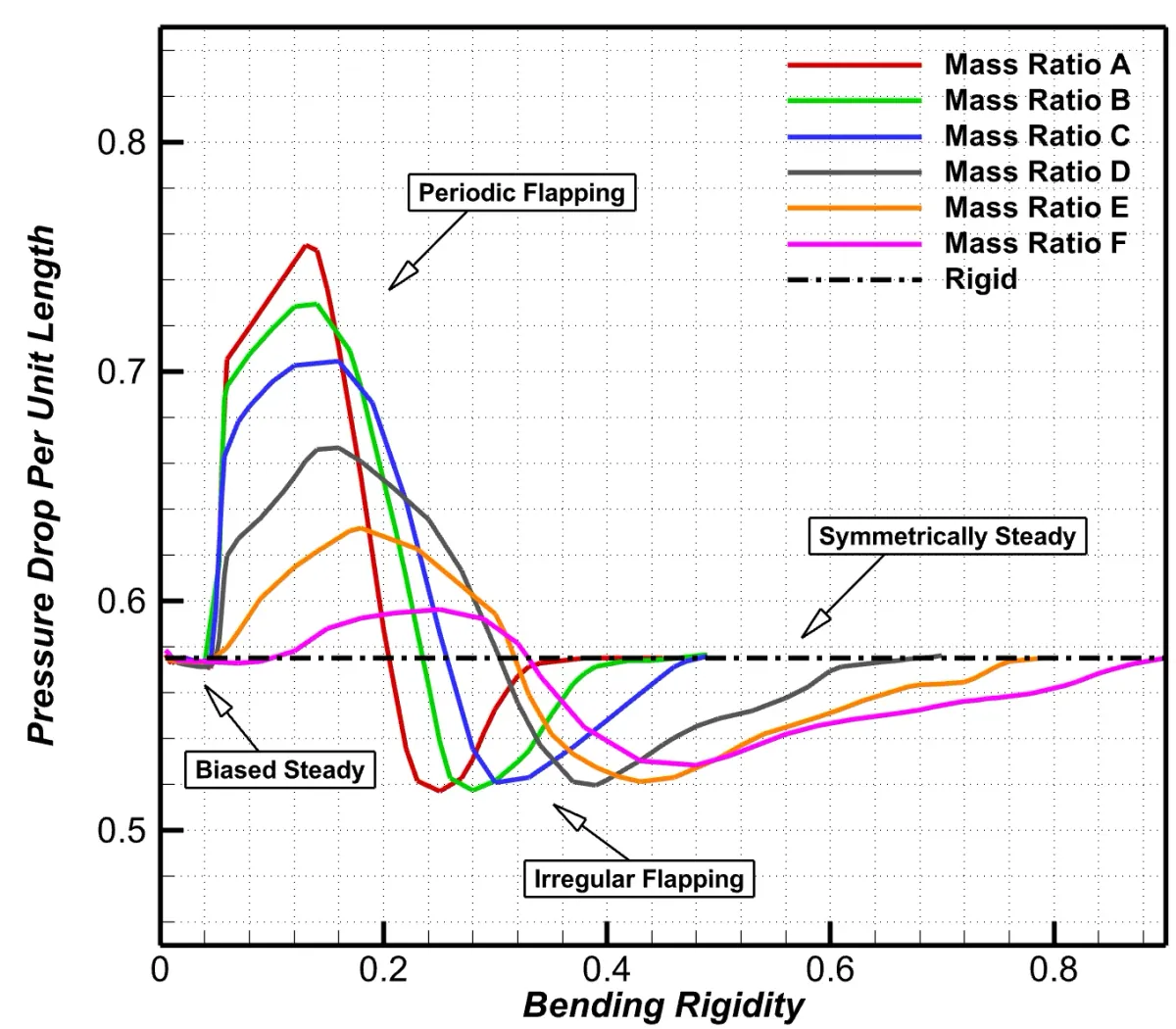
- Swept mass ratio, bending rigidity and porosity to map the fluid porous structure interaction.
- Tracked pressure drop, structural response and energy dissipation across the parameter space.
Figures
Outcome
Four distinct regimes emerged: biased steady, periodic flapping, irregular flapping and symmetrically steady. Lighter and more flexible elements raised flow obstruction and pressure drop at low bending rigidity, while heavier flaps gave more stable but less dynamic behaviour.
- IB-LBM
- Fluid porous structure interaction
- Porosity
- Pressure drop